 comparison
Alternatives to Healing Point for Lymphatic Drainage
Table of Contents
- Why People Seek Lymphatic Drainage Alternatives
- Manual Lymphatic Drainage Benefits and Professional Care
- Acupuncture for Lymphatic Drainage and TCM Methods
- At-Home Tools and DIY Lymphatic Drainage Techniques
- Lymphatic Drainage Recovery Time and Treatment Frequency
- Professional vs. DIY: What the Evidence Shows
- Contraindications and When to Avoid Lymphatic Drainage
- Frequently Asked Questions
Last Updated: September 28, 2026
Why People Seek Lymphatic Drainage Alternatives
When recovering from surgery or managing persistent swelling, lymphatic drainage alternatives become essential. The lymphatic system moves fluid through your body, and when it slows down, inflammation increases and recovery stalls. Many people seek options beyond a single clinic for flexibility, affordability, or tailored combinations.
Some clients need professional manual lymphatic drainage; others benefit from at-home tools or complementary therapies. Compression therapy reduces swelling, and combined with manual lymphatic drainage, can further aid reduction. Your body responds better when you match the right technique to your situation.
Manual Lymphatic Drainage Benefits and Professional Care
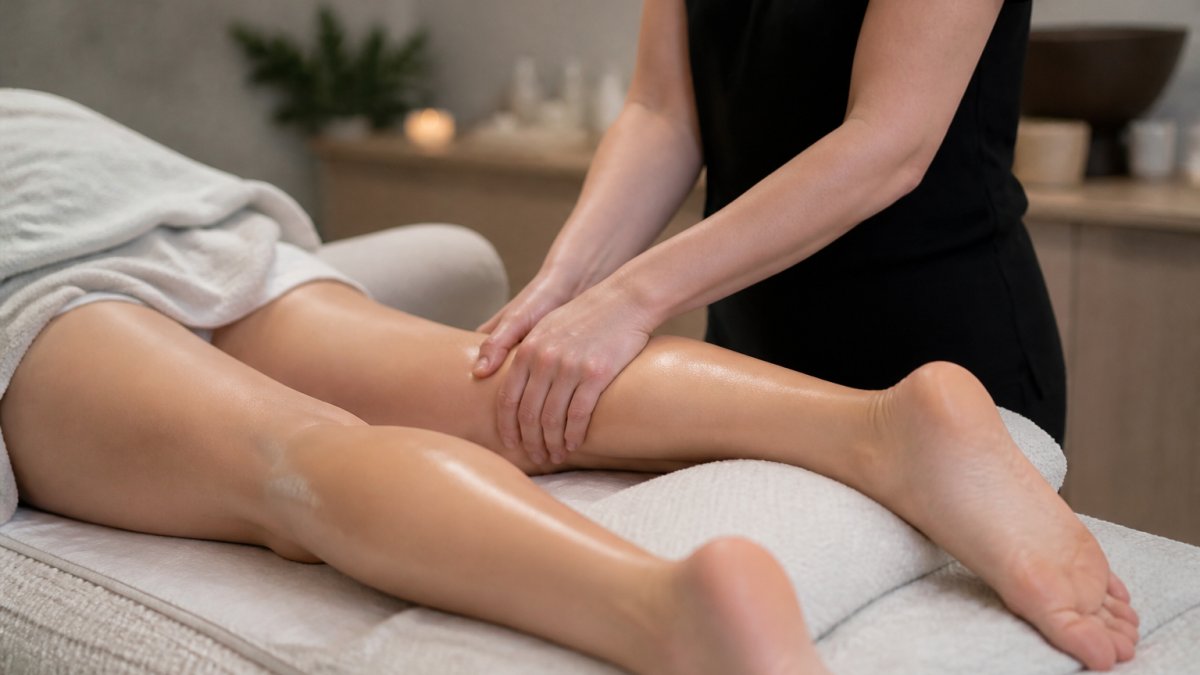
Professional manual lymphatic drainage is the clinical gold standard for post-surgery recovery and chronic swelling. This technique uses rhythmic, gentle pressure to encourage lymph fluid movement, reducing inflammation and accelerating healing.
According to MDPI research on lymphatic therapy, long-term lymphedema management combining manual lymphatic drainage with compression is critical for maintaining alternative lymphatic drainage pathways, especially in post-breast cancer patients. The technique works by stimulating the body's natural detoxification process without forcing fluid movement.
LOEDA specialises in the original Vodder technique, which uses precise hand pressure to activate lymphatic vessels without damaging tissue. Sessions typically run 45-60 minutes and address swelling after cosmetic surgery, post-operative bruising, or chronic fluid retention.
Clients often report improved sleep, reduced inflammation, and faster healing when combining professional sessions with at-home maintenance.
Acupuncture for Lymphatic Drainage and TCM Methods
Traditional Chinese Medicine offers a different pathway to lymphatic support. Acupuncture stimulates neuro-lymphatic points that signal your body to activate its own circulation and detoxification mechanisms.
Practitioners may use specific points to encourage lymphatic flow and reduce inflammation, and to support digestive lymphatic drainage and metabolic waste removal.
Tui Na, a form of Chinese therapeutic massage, can complement acupuncture by applying targeted pressure along meridians. Combined with acupuncture, this integrated approach may improve outcomes.
TCM addresses underlying energy imbalances that contribute to poor circulation, targeting root causes rather than symptoms alone.
At-Home Tools and DIY Lymphatic Drainage Techniques
At-home lymphatic support bridges the gap between professional sessions and daily maintenance. The key is understanding which tool addresses which problem and how to use it safely without professional oversight.
Dry Body Brushing
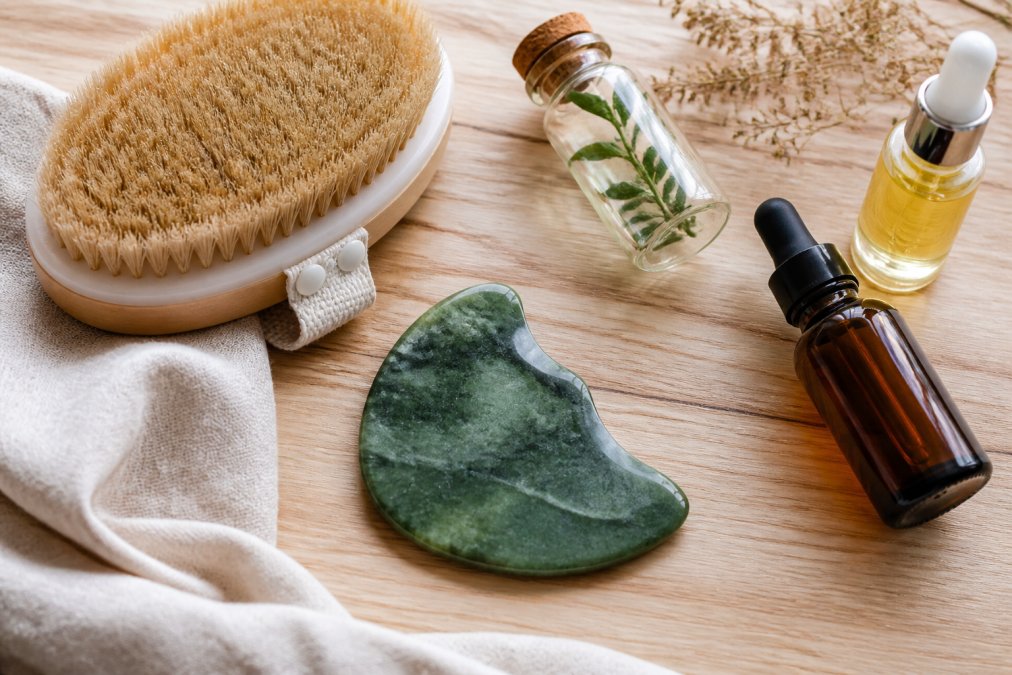
Dry brushing activates lymphatic vessels through gentle friction on dry skin, signalling your parasympathetic nervous system to increase lymphatic flow. Use a natural-bristle brush in long, sweeping strokes toward the heart: feet upward along legs, hands toward shoulders, and torso toward underarms where major lymph nodes sit.
Brush for 3-5 minutes each morning before showering on completely dry skin.
Dry brushing works best for maintenance and mild swelling, not post-surgical recovery or clinical lymphedema. It stimulates only superficial lymphatic vessels; for deeper tissue or significant swelling, it's insufficient alone.
Gua Sha and Traditional Scraping Methods
Gua Sha applies more pressure than dry brushing and penetrates deeper. The curved tool scrapes the skin in downward strokes, mobilising pooled fluid and making it more effective for localised swelling and tension.
Hold the tool at a 45-degree angle with moderate, consistent pressure. Work in one direction only, moving toward the heart and nearby lymph nodes: upward on the face, downward on neck and shoulders, and from ankle to hip on legs.
Sessions typically run 10-15 minutes per area, 3-4 times weekly for acute swelling or 1-2 times weekly for maintenance.
Gua Sha excels for facial puffiness, neck tension, and localised post-procedure bruising (safe 5-7 days post-op). Avoid it on broken skin, active infection, or areas with significant bruising.
Compression Garments and Bandaging
Compression sleeves, socks, and wraps squeeze tissue, preventing fluid accumulation and encouraging existing fluid toward lymph nodes. This passive approach is highly effective for maintenance and prevention.
Mild compression (15-20 mmHg) suits daily wear; moderate (20-30 mmHg) addresses mild swelling; strong (30-40 mmHg) is clinical-grade. Over-the-counter sleeves work best worn 8+ hours daily. Medical-grade compression may require prescription and professional fitting.
Compression is safe for most people but contraindicated with arterial insufficiency or active infection. Build wear time gradually over a week to avoid skin irritation.
Movement and Breathing Techniques
Lymphatic flow depends on muscle contraction and diaphragmatic breathing. Unlike blood, lymph has no pump; it relies on movement and pressure changes. Deep diaphragmatic breathing increases intra-abdominal pressure, pushing lymph upward.
Practice 5-10 minutes daily: sit comfortably, place one hand on your belly. Inhale slowly through your nose, allowing your belly to expand. Hold for 2-3 seconds. Exhale slowly. This activates the parasympathetic nervous system and encourages lymphatic movement.
Gentle movement, walking, yoga, or swimming, activates lymphatic flow. 20-30 minutes of low-impact movement 4-5 times weekly supports lymphatic function.
Combining Tools: A Realistic DIY Protocol
A sample daily routine: 5 minutes dry brushing, 10 minutes diaphragmatic breathing, 15 minutes Gua Sha, and 20 minutes of walking. This combination addresses multiple mechanisms and costs under £50 in tools.
Expect results in 2-4 weeks with consistent daily practice. At-home tools maintain professional results but don't replace professional care for acute post-surgical swelling or clinical lymphedema.
Lymphatic Drainage Recovery Time and Treatment Frequency
Professional manual lymphatic drainage may show results within a few sessions for acute post-surgery swelling. For chronic lymphedema, results may accumulate over several weeks with consistent sessions. At-home tools require daily use; consistency matters more than duration. Acupuncture typically requires regular sessions for several weeks, then maintenance. Expect several weeks for meaningful change; acute post-surgery swelling may respond faster.
Professional vs. DIY: What the Evidence Shows
The evidence for lymphatic drainage is condition-specific. Not all swelling responds equally to professional care or at-home tools, and the research distinguishes between clinical efficacy and wellness claims. Postoperative recovery protocols often highlight how specific lymphatic drainage benefits can mitigate tissue trauma and accelerate the resolution of localized edema.
Where Professional Manual Lymphatic Drainage Has Strong Evidence
Manual lymphatic drainage (MLD) has robust clinical backing for three specific conditions:
Post-surgical swelling and bruising. MLD can reduce post-operative swelling faster than no intervention, with results visible within a few sessions. For cosmetic surgery, MLD may accelerate bruise resorption and reduce inflammation-related pain. Surgeons often recommend MLD within days of surgery.
Lymphedema management. MLD combined with compression therapy is the gold standard. MLD plus compression can reduce limb volume, compared to compression alone.
Chronic fluid retention and venous insufficiency. Patients with chronic swelling may see measurable improvement with consistent MLD sessions.
Where At-Home Tools Fall Short
At-home tools lack the precision and depth of professional MLD. Dry brushing and Gua Sha stimulate only superficial lymphatic vessels; they cannot redirect fluid around scar tissue or activate deep lymph nodes the way trained hands can. Research shows at-home tools are effective for maintenance (preventing recurrence after professional treatment) but insufficient for acute swelling or clinical lymphedema.
Consistency is the hidden cost. At-home protocols require daily discipline. Studies tracking compliance show that some people may abandon daily at-home routines. Professional sessions, by contrast, enforce consistency through scheduled appointments.
The Integration Framework: When to Combine Modalities
The strongest evidence emerges when modalities are layered strategically. Here's how the research supports integration:
Acute post-surgery (weeks 1-4). Professional MLD 2-3 times weekly + daily at-home dry brushing or compression. MLD addresses acute congestion; at-home tools maintain results between sessions. This combination may reduce swelling faster than MLD alone.
Chronic lymphedema (weeks 4-12+). Professional MLD 1-2 times weekly + daily compression + weekly acupuncture. MLD opens pathways; compression maintains them; acupuncture (at points like SP9 and ST36) stimulates the body's own circulation mechanisms, reducing dependency on manual drainage over time. Patients report better long-term outcomes with this stack than with MLD or compression alone.
Maintenance and prevention (ongoing). At-home tools (dry brushing, Gua Sha, movement) 4-5 times weekly + monthly professional check-ins. This prevents recurrence and costs far less than ongoing intensive professional care.
Mild daily swelling (no acute injury). At-home tools alone, with acupuncture or herbal support if underlying circulation is weak.
Cost-Benefit Reality
At-home tools require only time investment.
However, the cost-per-outcome may favour professional care for acute swelling. A client seeking professional MLD may recover faster; a client relying only on at-home tools may take longer and still see incomplete results. For chronic conditions, the hybrid approach (professional + at-home) costs more initially but prevents expensive complications and reduces total treatment duration.
Scientific Evidence vs. Anecdotal Claims
Differentiating between proven and unproven claims is essential. Evidence-backed outcomes include reduced swelling, faster bruise resorption, improved range of motion post-surgery, and better quality of life in lymphedema patients. Anecdotal claims (often found on social media) include 'lymphatic drainage detoxifies your body,' 'it cures chronic fatigue,' or 'it boosts immunity.' These lack clinical support and can mislead people away from necessary medical care.
The Decision Tree: Which Approach for Your Situation?
Choose professional MLD if: You have post-surgical swelling, diagnosed lymphedema, or significant chronic swelling that hasn't improved with at-home methods in 4 weeks.
Contraindications and When to Avoid Lymphatic Drainage
Not everyone should pursue lymphatic drainage, and certain conditions require medical clearance first.
Frequently Asked Questions
What is the best way to flush out your lymphatic system?
The most effective approach combines compression therapy with manual lymphatic drainage, which can further aid reduction. Professional manual lymphatic drainage uses rhythmic, gentle techniques to stimulate lymph fluid movement. For maintenance, diaphragmatic breathing, rebounding, and dry brushing support circulation between professional sessions. However, clinical-grade lymphatic drainage requires training and should be performed by a qualified therapist, particularly after surgery or for lymphedema management.
Can acupuncture support lymphatic system function?
Yes. Traditional Chinese Medicine practitioners use acupuncture to support lymphatic-like flow and body energy circulation. Acupuncture stimulates neurotransmitter release and enhances blood flow, which supports the immune response and metabolic waste removal. Integration of acupuncture with compression and manual drainage offers a holistic approach to lymphatic health.
How often should I seek lymphatic drainage treatments?
Treatment frequency depends on your condition and goals. Post-operative patients may benefit from regular sessions initially to manage swelling and inflammation, then taper as healing progresses. For chronic lymphedema or maintenance, long-term therapy including manual lymphatic drainage and compression can be critical for maintaining alternative lymphatic drainage pathways. DIY methods like dry brushing can be done daily, while professional treatments are best scheduled based on your practitioner's recommendation during a consultation.
What is the difference between manual lymphatic drainage and acupressure?
Manual lymphatic drainage uses slow, rhythmic hand techniques to move lymph fluid along the lymphatic system's pathways, typically following a specific sequence taught in methods like the original Vodder technique. Acupressure targets specific points to stimulate energy flow and circulation. Both can reduce inflammation and support detoxification, but drainage is often more suited to post-surgery recovery and swelling reduction, whilst acupressure can be part of a holistic wellness routine. Many practitioners combine both methods for maximum benefit.