 how-to
7 Ways to Combine Massage With Physical Therapy Exercises
Last Updated: November 4, 2026
Quick Summary
To combine massage and physical therapy exercises, pair hands-on soft-tissue work with active movement in one plan, using massage to calm tissue and exercise to rebuild strength and control. A sequenced week alternates prepare-and-move days, exercise-only days and recovery massage, ideally booked 24-48 hours after your hardest training day.
- Massage before exercise suits tight, guarded tissue; massage after exercise is used for recovery and soreness.
- A 2025 study by D. Arsovski found three weeks of combined therapy produced measurable gains in pain, mobility and function.
- Hold each stretch for 20-30 seconds and breathe out as you settle in.
- Tell your physiotherapist about your remedial massage and your massage therapist about your exercises.
- Soreness lasting more than 48 hours is a signal to reassess, not to escalate.
Table of Contents
- Why Massage and Physical Therapy Work Better Together
- Massage Before or After Exercise: Choosing the Right Order
- A Sequenced Session Plan for Combining Massage With Physical Therapy Exercises
- Massage and Physiotherapy Together: Coordinating Your Care Team
- Stretching After Massage: What to Do and When
- Massage for Muscle Recovery: Timing, Frequency and What to Expect
- Safety Screening and Signs to Stop
- Book a Remedial Massage Session to Support Your Exercise Plan
- Frequently Asked Questions
Why Massage and Physical Therapy Work Better Together
Combining massage and physical therapy exercises means pairing hands-on soft-tissue work with active movement in one plan, so each one covers what the other misses. Massage calms tissue and eases pain; exercise rebuilds strength and control.
The order matters more than most people expect. Get it right and you move better with less discomfort.
What the Evidence Actually Shows
The research is encouraging but honest. A 2025 clinical study by D. Arsovski and colleagues found that three weeks of combined therapy produced measurable gains in pain reduction, mobility and function, with results significant at p < 0.05 (clinical study on deep tissue massage therapy).
Research from the University of Illinois Chicago found that massage improved blood flow after exercise, though the effect faded within 72 hours. That short window is exactly why timing matters.
One caveat worth knowing: a 2023 review by M. Dakić found massage does not significantly improve motor abilities, apart from flexibility. Massage alone is unlikely to build strength. It prepares tissue, while exercise does the building.
Massage Before or After Exercise: Choosing the Right Order
Massage before exercise is best for tight, guarded tissue you need to move through comfortably. Massage after exercise is often used for recovery, soreness and relaxation.
When to Massage Before Exercise
Use pre-exercise massage when stiffness is limiting your movement. A short session of targeted massage on the hips, calves or shoulders can improve range of motion before you train. Keep it brief and moderate. Deep, aggressive work right before loading a muscle can leave it feeling sluggish.
When to Massage After Exercise
Post-exercise massage is often chosen for recovery. It may ease muscle tension and help you wind down.
Best for: post-workout soreness and wind-down. Skip if: you have acute swelling, bruising or a suspected injury that hasn't been assessed.
A Sequenced Session Plan for Combining Massage With Physical Therapy Exercises
Most guides describe benefits but stop short of showing you how to actually run a week. This plan sequences massage, mobility, strengthening and rest so each session builds on the last. It follows a simple rule: prepare, load, recover, review.
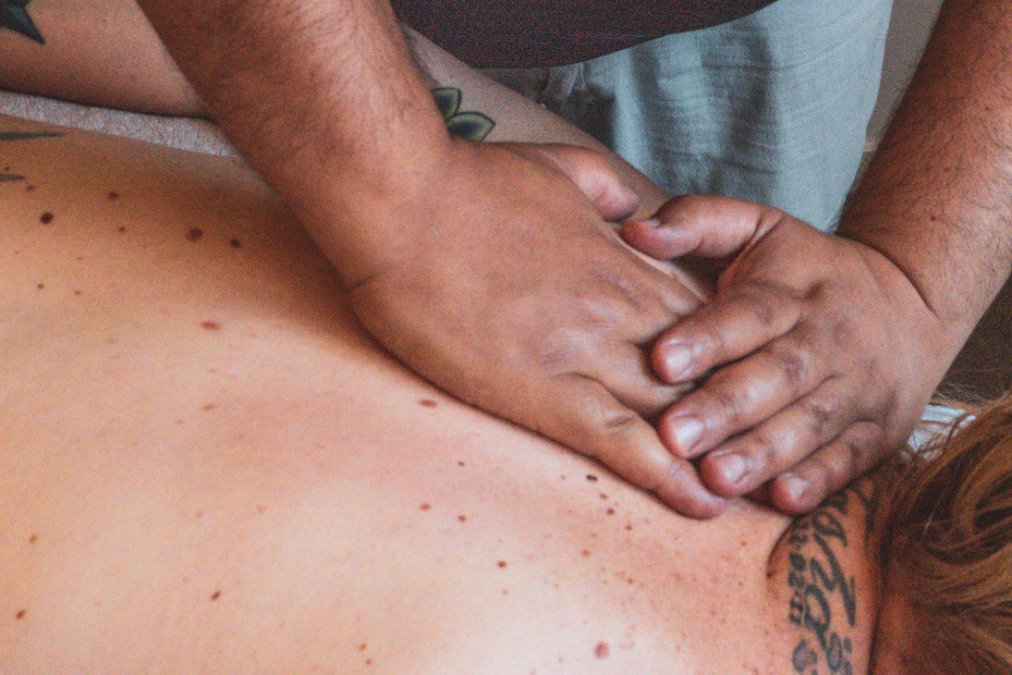
The Weekly Template
| Day | Focus | What to Do | Duration | Why It Matters |
|---|---|---|---|---|
| Monday | Prepare + move | 10 min light massage on tight areas, then prescribed strength and mobility exercises | 40-50 min total | Uses reduced stiffness to improve exercise quality |
| Tuesday | Move | Full exercise session, no massage | 30-40 min | Builds load tolerance without hands-on assistance |
| Wednesday | Recover | Remedial massage session | 45-60 min | Calms tissue and restores range after loading |
| Thursday | Move | Exercise session, focus on control and range | 30-40 min | Consolidates gains while tissue is recovered |
| Friday | Prepare + move | Short massage (5-10 min) then exercises | 35-45 min | Maintains range before weekend load |
| Saturday | Active rest | Walking, swimming or gentle mobility | 20-30 min | Promotes circulation without adding strain |
| Sunday | Rest + review | Note pain, range of motion and exercise tolerance | 5 min | Provides data to adjust next week |
How to Run Each Session
- Prepare (5-15 minutes): Use light, targeted massage or soft-tissue work on the area that feels tightest. Keep pressure moderate, the goal is to ease guarding, not to fatigue the muscle before you load it.
- Move (20-30 minutes): Perform your prescribed physical therapy exercises. Prioritise strength and control over speed or range. If a movement reproduces sharp pain, stop and note it for your therapist.
- Stretch (5-10 minutes): Stretch gently while tissue is warm. Hold each stretch for 20-30 seconds and breathe out as you settle in.
- Recover: Schedule a fuller remedial massage session later in the week, ideally 24-48 hours after your hardest training day.
- Review: At the end of the week, record pain levels (0-10), range of motion for the affected joint, and how many repetitions or sets you completed. Bring these notes to your next appointment.
Watch out: If you feel significantly sorer the day after a session, reduce the exercise volume or massage pressure next time rather than pushing through, soreness that lasts more than 48 hours is a signal to reassess, not to escalate.
Adjusting the Plan
Massage is often scheduled less frequently than exercise, with the exact pattern depending on your plan. If your goal is range of motion, place massage closer to the exercise session. If your goal is strength, keep massage on a separate day so it does not interfere with loading. The right balance of exercise and massage depends on your assessment and response, so discuss a starting point with your practitioners.
Massage and Physiotherapy Together: Coordinating Your Care Team
Massage and physiotherapy together work best when both practitioners know the same plan. Tell your physiotherapist you're having remedial massage, and tell your massage therapist what exercises you've been given. This keeps the work aligned instead of pulling in two directions.
Questions to Ask Your Physiotherapist
- What are we trying to change, and how will we measure it?
- Are there any movements or positions I should avoid during massage?
- How should I adjust my home exercises on the days I have massage?
- What signs should prompt me to stop an exercise and call you?
Questions to Ask Your Massage Therapist
- Are you comfortable working alongside my physiotherapy plan?
- Which areas should you focus on, and which should you avoid?
- How much pressure is appropriate given my stage of recovery?
- What should I do after the session, rest, stretch or move?
Sharing Information Safely
Ask both providers whether they are happy for you to share relevant reports or exercise sheets. In Australia, your consent is required before health information is shared between practitioners, so confirm what each provider needs and how they prefer to receive it. A simple approach is to keep a one-page summary of your diagnosis, current exercises, medications and any post-operative restrictions, and offer it to both.
Coordinating At-Home Care
Your home exercises are where most of the change happens. A common pattern is to do prescribed exercises on the days you do not have massage, and to keep massage days lighter on loading. If your massage therapist gives you stretches, check with your physiotherapist that they fit the overall plan rather than duplicating or contradicting it.
Watch out: If one provider recommends something that conflicts with the other's advice, do not try to average the two, ask them to clarify with each other or with your GP, and pause the conflicting activity until you have a clear answer.
When to Escalate
If you notice new swelling, sharp pain, numbness or a loss of function after either treatment, contact the relevant practitioner before your next session. Neither massage nor exercise should be continued through symptoms that are worsening rather than settling.
Stretching After Massage: What to Do and When
Stretching after massage is best done gently, within the first day, while tissue is warm and pliable. Hold each stretch for 20-30 seconds without pushing into pain. The goal is to keep the range you've gained, not to force more.
A few rules we follow:
- Stretch slowly and breathe out as you settle in.
- Avoid bouncing or forcing a stretch.
- Skip deep stretching on very sore or inflamed areas.
- Repeat daily between sessions to prevent muscle knots returning.
For a daily routine that supports this, see our guide on preventing muscle knots with daily stretching routines.
Massage for Muscle Recovery: Timing, Frequency and What to Expect
Massage for muscle recovery is often most useful when it's consistent rather than occasional. Frequency should be discussed with your practitioner.
Timing tips:
- Book within 24-48 hours of harder training.
- Keep pre-event massage light.
- Use post-event massage for calm and circulation.
Soreness after a session is common and usually settles within a day or two. Our article on managing muscle soreness after remedial massage explains what's normal. If you're wondering how many sessions you need for results, that guide breaks it down.
Safety Screening and Signs to Stop
Safety screening comes first. Before combining therapies, check with a qualified professional if you have an injury, a chronic condition, are pregnant, or take blood-thinning medication. Massage and exercise are not right for everyone at every stage, so safety should be discussed with a qualified professional. Once a professional has confirmed that both approaches are appropriate, you can stack recovery therapies in a way that respects your condition and current stage of healing.
Stop and seek advice if you notice:
- Sharp or worsening pain
- New swelling, redness or heat
- Numbness or tingling
- Dizziness during exercise
We never diagnose here. If something doesn't feel right, get it assessed before pushing on.
Book a Remedial Massage Session to Support Your Exercise Plan
The hardest part of combining massage with physical therapy exercises is starting, and keeping the two in step. That's where we can help. Our remedial massage sessions can be tailored to your movement goals, in a calm, welcoming space. If your recovery involves deeper soft-tissue work, our Myotherapy sessions can complement the plan alongside your exercises. You can check current pricing on our website before you book.
Ready to move with less pain and more control? Get started with LOEDA and give your exercise plan the recovery support it deserves.
Frequently Asked Questions
Should I massage before or after physical therapy exercises?
It depends on your goal. Light massage before exercise can ease muscle tension and help you move into the session more comfortably, while massage after exercise is often used to support recovery and reduce soreness. Some research suggests massage may improve blood flow after exercise, though the effect appears to be short-lived. Ask your therapist to match the order to your treatment plan rather than following a fixed rule.
Can massage help me do rehabilitation exercises more comfortably?
Massage can reduce muscle tension and improve flexibility, which may make some rehabilitation exercises easier to perform. Some studies suggest combined therapy of massage and supervised exercise may improve pain and function, though results vary. Massage does not replace exercise; it supports your ability to do it.
How long should I wait to exercise after a massage?
Many people return to light activity the same day, but vigorous exercise straight after a deep remedial massage can feel uncomfortable while tissues are still warm and relaxed. A practical approach is to wait a few hours, start with gentle mobility or stretching, and build back to full intensity the next day. If you had deep tissue work or felt sore afterwards, give yourself more time and check with your therapist.
What should I do if massage makes my pain worse?
Mild soreness for a day or two after massage is common, but sharp or worsening pain is not something to push through. Stop the activity, note what you felt and when, and tell both your massage therapist and your physiotherapist so they can adjust your treatment plan. Persistent or severe pain, swelling, numbness or bruising should be reviewed by a qualified health professional before your next session.