 blog
Remedial Massage vs Chiropractic for Muscle Tension
Table of Contents
- Remedial Massage vs Chiropractic: How the Two Approaches Differ
- What the Evidence Says About Each for Muscle Tension
- When a Chiropractor for Tight Muscles Makes Sense
- Massage or Chiropractor for Back Pain: Choosing by Cause
- Remedial Massage or Relaxation Massage: Which Do You Need?
- How Long Does Remedial Massage Soreness Last?
- What an Appointment Involves, What It Costs and How Often to Go
- Risks, Red Flags and When to See a GP First
- Frequently Asked Questions
Last Updated: October 17, 2026
Remedial Massage vs Chiropractic: How the Two Approaches Differ
If you are weighing up whether remedial massage is better than chiropractic for muscle tension, the honest answer is that they solve different problems. Remedial massage works on soft tissue: muscles, fascia and the connective tissue around them. Chiropractic care works on the spine and joints. At LOEDA, we treat plenty of people who arrive with tight, aching shoulders and assume they need one or the other.
A review of massage therapy for musculoskeletal pain found that therapeutic massage produced better pain and disability scores than sham treatment, and beat self-care alone. That is useful context, but it does not settle the massage-versus-chiropractic question. No strong head-to-head evidence exists.
Here is the short version:
- Muscle tension, knots and desk-work tightness → remedial massage is usually the more direct option
- Joint restriction, stiffness after injury, spinal complaints → chiropractic assessment makes more sense
- Pain with numbness, weakness or bladder changes → see a GP first, not either practitioner
Muscles and Soft Tissue: The Massage Focus
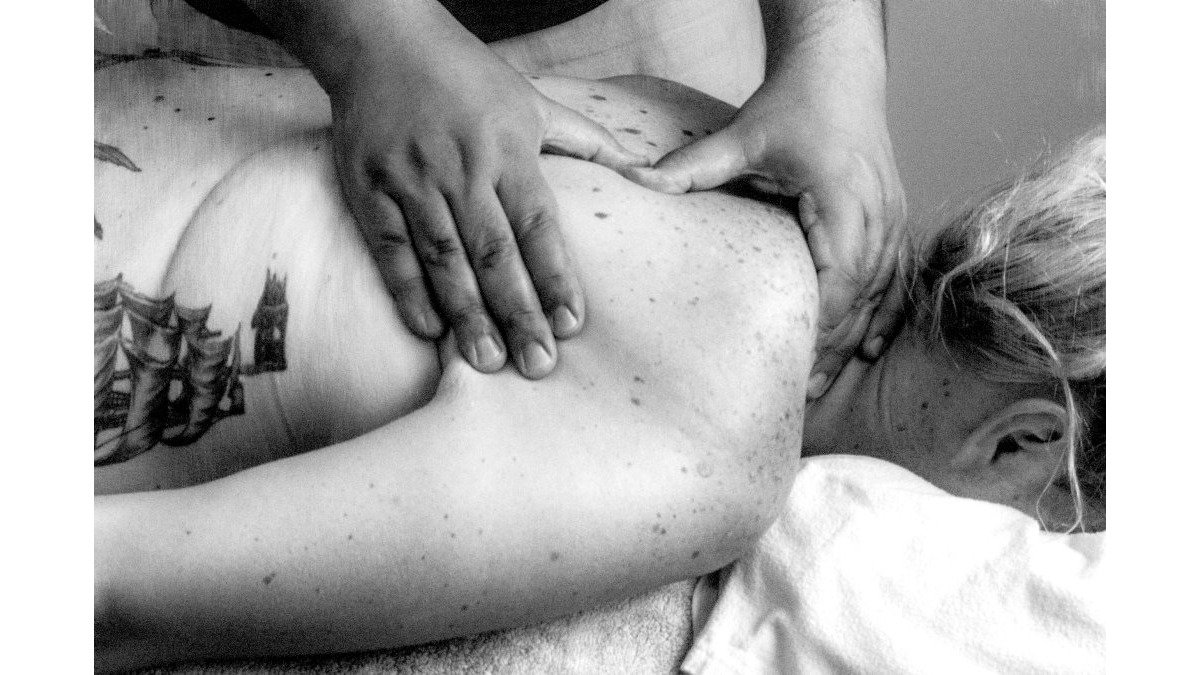
Remedial massage targets muscle tissue directly. A practitioner assesses where tissue feels tight, knotted or restricted, then uses pressure and movement to ease it. The aim is better circulation, more range of motion and less pain.
It suits problems that live in the muscle itself:
- Tight shoulders and neck from computer work
- Muscle knots and trigger points
- Cramping or muscle spasm
- Restricted movement after a strain
- General stiffness from poor posture
Spine, Joints and Alignment: The Chiropractic Focus
Chiropractic care centres on the spine and joints. A chiropractor assesses how your joints move, then uses hands-on techniques, often spinal adjustment, to improve that movement. The focus sits on structural issues and how the nervous system interacts with the spine.
Where it fits best:
- Joint stiffness and restricted spinal movement
- Some forms of back and neck pain
- Headaches linked to neck tension
- Ongoing posture-related complaints
The two approaches overlap more than the marketing suggests. Tight muscles can pull joints out of their normal range, and stiff joints can make muscles work harder.
What the Evidence Says About Each for Muscle Tension
The evidence base is uneven, and the honest framing matters more than a headline verdict. Most research on hands-on care for muscle tension measures short-term symptom relief rather than long-term resolution, and very little of it compares remedial massage with chiropractic head-to-head.
What the research generally supports
- Massage therapy has moderate-quality support for short-term relief of musculoskeletal pain, including neck and shoulder tension, with benefits for pain and disability scores compared with sham treatment or self-care alone. A review of massage therapy for musculoskeletal pain is a reasonable starting point.
- Chiropractic care has reasonable evidence for some spinal complaints, particularly short-term improvement in low back pain and neck pain when combined with exercise and advice.
- Neither approach has strong evidence that it resolves long-standing muscle tension on its own. The best outcomes in the literature tend to come from combined approaches: hands-on care plus movement, load management and self-care.
What the research does not show
- It does not show that one profession is universally better for muscle tension. Trials rarely isolate 'muscle tension' as a clean diagnosis, and participants often receive mixed techniques.
- It does not show that either treatment changes underlying structure. Claims about 'realigning' the spine or 'releasing' fascia permanently are not well supported by high-quality evidence.
- It does not show that more sessions are better. Dose and frequency are poorly studied, which is why honest reassessment matters more than a fixed package.
How to read the evidence as a patient
A common pattern in practice is that people improve for reasons beyond the technique itself: touch, reassurance, reduced guarding, better sleep, and the advice they receive alongside treatment. That does not make hands-on care useless, but it does mean you should judge a course of treatment by whether your function is improving, not by whether the theory sounds convincing.
When a Chiropractor for Tight Muscles Makes Sense
A chiropractor for tight muscles is worth considering when the tightness keeps coming back in the same spot. That pattern often points to a joint that is not moving well, forcing the surrounding muscle to compensate.
Signs chiropractic assessment may suit you:
- The same area tightens repeatedly despite massage
- You feel stiff rather than sore
- Movement is restricted in a specific direction
- You have had a fall or injury that changed how you move
If your tension is purely muscular, a chiropractor may still help, but the soft tissue work is doing less of the heavy lifting.
Massage or Chiropractor for Back Pain: Choosing by Cause
For back pain, the massage or chiropractor decision should follow the cause, not the symptom. Back pain from long hours at a desk with tight hip flexors and stiff shoulders usually responds to soft tissue work. Back pain from a joint that locks up under load may respond better to chiropractic care.
A simple way to think about it:
| Your pattern | Better first option | Why |
|---|---|---|
| Tight, knotted muscles after desk work | Remedial massage | Direct soft tissue work |
| Stiff, restricted joint movement | Chiropractic assessment | Joint-focused care |
| Pain that moves around with stress | Remedial massage | Calms the nervous system |
| Pain after a fall or sudden twist | GP first, then assessment | Rule out injury |
| Numbness, weakness or bladder changes | GP urgently | Red flag symptoms |
Many people benefit from both at different stages. Start with the one that matches your main pattern.
Remedial Massage or Relaxation Massage: Which Do You Need?
These are not the same treatment. A remedial massage or relaxation massage choice depends on whether you want a clinical outcome or general unwinding.
- Remedial massage: assessment-led, firmer pressure, targets specific tissue problems, aims to reduce pain and restore movement
- Relaxation massage: gentler, full-body, focused on calming the nervous system and easing stress
If your goal is to address muscle tension and tightness, remedial is the better fit. If you simply want to switch off, relaxation does that job well. Plenty of people book remedial and find the calming effect comes anyway.
How Long Does Remedial Massage Soreness Last?
Remedial massage soreness usually settles within 24 to 48 hours. It tends to feel like the ache after unaccustomed exercise: tender, a little stiff, then gone. Firmer work on knotted tissue can leave you tender for up to a couple of days.
What helps:
- Drink water and keep moving gently
- Apply warmth, not ice, to sore areas
- Avoid heavy training straight after a deep session
- Tell your practitioner if soreness lasts beyond a few days
Soreness is not a sign the treatment worked. It is a normal response to tissue being worked. If pain worsens rather than eases, check in with your practitioner or GP.
What an Appointment Involves, What It Costs and How Often to Go

Knowing what actually happens in each appointment helps you choose sensibly, because the two professions assess and treat quite differently.
A remedial massage appointment
- A first session usually runs 60 minutes, sometimes 75 to 90 for a full assessment and treatment.
- Expect a short health history, questions about desk setup, training load and stress, and a movement or posture screen before hands-on work.
- Treatment is applied directly to tight, restricted or painful tissue, often with firmer pressure on knots and trigger points.
- You may be given stretches, ergonomic changes or a simple strengthening exercise to do between sessions.
- Aftercare advice usually covers hydration, gentle movement and what soreness to expect.
A chiropractic appointment
- A first consultation often runs 30 to 45 minutes, including history, examination and sometimes imaging referral if red flags are present.
- Treatment commonly involves spinal adjustment or mobilisation, and may include soft tissue work and exercise advice.
- You may hear a popping sound during adjustment; this is gas releasing in the joint, not evidence of correction.
- Follow-up visits are often shorter, around 15 to 30 minutes.
Cost and access
Pricing varies by clinic, session length and practitioner experience, so check current rates directly.
How often to go
A common pattern is weekly or fortnightly sessions for the first few weeks while symptoms settle, then spacing out to monthly or as-needed.
How to judge whether it is working
- Are you moving better, sleeping better or needing fewer painkillers?
- Is the relief lasting longer between sessions?
- Are you doing less of the home advice because you no longer need it?
If the answer to those questions is no after a reasonable trial, reassess rather than simply booking more sessions. Our myotherapy service is another option if you want a broader assessment of muscle function and movement.
Risks, Red Flags and When to See a GP First
Both treatments are generally low risk when delivered by a trained practitioner. Mild soreness, tiredness or temporary tenderness afterwards is common. Serious complications are uncommon but possible, particularly with high-velocity spinal adjustment.
See a GP before booking either treatment if you have:
- Numbness, tingling or weakness in a limb
- Loss of bladder or bowel control
- Unexplained weight loss with back pain
- Fever, or pain that began after significant trauma
- A history of cancer, osteoporosis or a bleeding disorder
Pregnancy, recent surgery and some medications also warrant a conversation with your GP or practitioner first.
Frequently Asked Questions
Is a massage or chiropractor better for back pain?
It depends on what is driving the pain. If your back pain comes from tight, overworked or knotted muscles, remedial massage is usually the more direct option because it works on the soft tissue itself. If the pain is tied to joint restriction or spinal alignment, chiropractic care may suit better. A 2013 review found therapeutic massage produced better pain and disability scores than sham laser and was superior to self-care, but it did not compare massage directly with chiropractic. A proper assessment is the only way to know which fits your case.
Do chiropractors deal with tight muscles?
Yes, but usually as a secondary effect. A chiropractor for tight muscles tends to focus on the spine and joints, on the reasoning that restoring movement in a restricted joint can reduce the muscle guarding around it. Some also use soft tissue work alongside adjustments. If your tightness is the main problem and there is no joint component, a remedial massage therapist who works directly on muscle tissue is often the more targeted choice.
Should I get a remedial or relaxation massage?
Choose remedial massage if you have a specific complaint: persistent tension, restricted movement, knots that do not release, or pain that keeps returning. It involves an assessment and targeted pressure on the affected tissue. Choose relaxation massage if your goal is general calm, stress relief and better sleep without a clinical focus. Many people book remedial when they actually want relaxation and find the pressure more intense than expected, so be clear about your goal when you book.
How long does remedial massage soreness last?
Most people feel soreness for 24 to 48 hours after a remedial massage, similar to the ache after unaccustomed exercise. It usually peaks the next day and settles on its own. Drinking water, gentle movement and warmth can help. Soreness that lasts beyond three days, or pain that gets worse rather than better, is not typical and is worth mentioning to your practitioner or GP.
Muscle tension that keeps returning deserves a proper look, not another guess. At LOEDA, our practitioners offer remedial massage, myotherapy and lymphatic drainage in a calm, restorative setting, with assessment-led care that adapts to how your body responds. Book a session and we will help you work out whether soft tissue treatment is the right starting point for your tension.