 ultimate-guide
7 Safety Facts About Cosmetic Acupuncture for Skin
Quick Summary
Cosmetic acupuncture is generally regarded as low-risk when a trained practitioner uses sterile equipment, but the research base is small. Reviews conclude that evidence on its effects and safety is limited, so claims about benefits should be read with caution.
- Mild bruising at needle sites is the main side effect to expect, and it is usually mild.
- Bruising can last several days and may be more noticeable on fair or thin skin.
- People with bleeding disorders or on blood thinners should tell their practitioner before treatment.
- Avoid needling through infected, broken, sunburnt, or recently waxed skin.
- Check that the practitioner is registered with AHPRA and uses sterile, single-use needles.
Table of Contents
- What Cosmetic Acupuncture Involves and How It Is Meant to Work
- What the Evidence Says About Safety and Effectiveness
- Cosmetic Acupuncture Side Effects to Expect and Watch For
- Cosmetic Acupuncture Contraindications: Who Should Avoid It
- Checking Practitioner Qualifications and Sterile Technique
- Cosmetic Acupuncture Aftercare and When to Seek Medical Advice
- Booking a Safety-First Consultation Before Your First Session
- Frequently Asked Questions
What Cosmetic Acupuncture Involves and How It Is Meant to Work
Last Updated: October 27, 2026
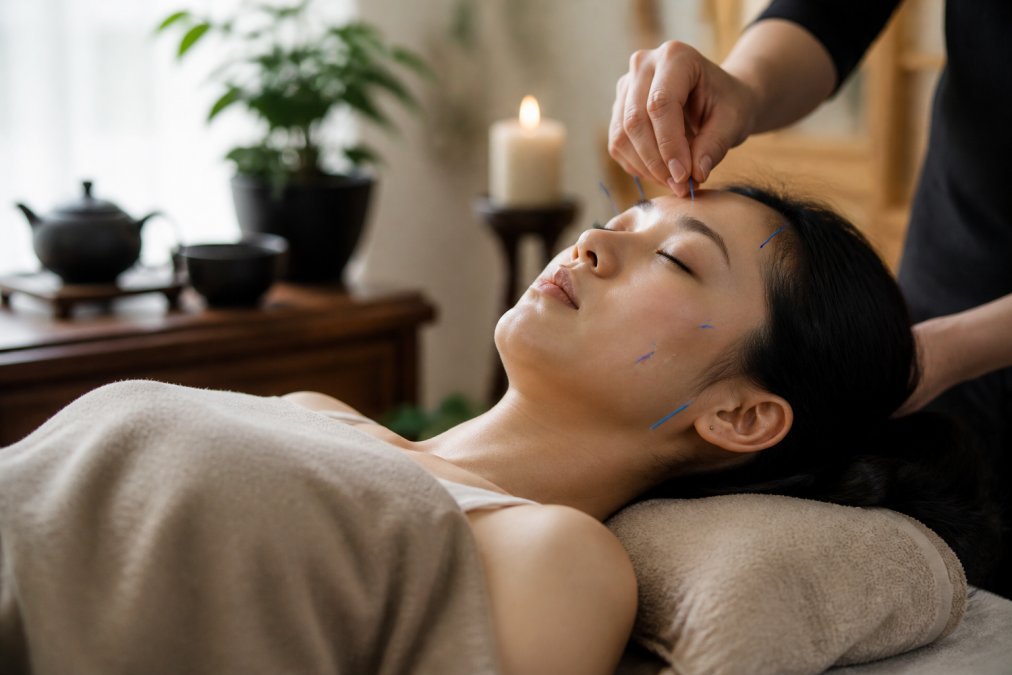
Cosmetic acupuncture is a form of acupuncture used on the face and neck with the aim of improving skin appearance, and it is generally regarded as a low-risk treatment when it is carried out by a trained practitioner using sterile equipment.
Traditional theory holds that stimulating these points supports circulation and energy flow, which is why practitioners describe it as supporting skin tone and a more even complexion. Modern researchers approach this differently. The proposed mechanisms, such as increased local blood flow and stimulation of collagen production, are still being studied, and the evidence is not yet conclusive.
Cosmetic acupuncture is commonly offered for fine lines, skin tone, and general skin rejuvenation. Read more about the benefits of cosmetic acupuncture for skin. Practitioners sometimes describe it as a more natural alternative to injectable treatments, though this comparison is largely a marketing one rather than an evidence-based equivalence.
What the Evidence Says About Safety and Effectiveness
The honest answer to is cosmetic acupuncture safe for skin is that the research base is small. For a deeper, evidence-focused overview, see the comprehensive guide to cosmetic acupuncture. A systematic review by B. C. Shin et al., systematic review of prospective studies on acupuncture for cosmetic use, 2018 concluded that evidence on the effects and safety of cosmetic acupuncture was limited. That finding matters because it means claims about benefits should be read with caution.
A study of facial cosmetic acupuncture involving 27 participants reported improved facial elasticity, but the authors themselves noted that evidence for efficacy and safety was limited. Y. Yun et al., Effect of Facial Cosmetic Acupuncture on Facial Elasticity, 2013 A small sample like this can suggest a direction for further research, but it cannot confirm a reliable result for the wider population.
A 2024 review of face and body acupuncture for glabellar frown lines described acupuncture as generally considered safe when performed by experienced practitioners, with minimal or no side effects. H. Haghir et al., Effects of Face and Body Acupuncture on Glabellar Frown Lines, 2024 That statement describes general acupuncture safety and does not establish a specific safety profile for cosmetic facial use.
Cosmetic Acupuncture Side Effects to Expect and Watch For
Side effects are generally minor, but they are not zero. The most commonly described effect is mild bruising at the needle insertion points. Henry Ford Health, Does Cosmetic Acupuncture Work?, 2026 notes that bruising is the main side effect to expect, and that it is usually mild.
A case study of subcision acupuncture for facial wrinkles reported bruising and the appearance of wrinkles that had not been treated, which the authors recorded as minor adverse events. H. I. Park et al., Subcision Acupuncture for Facial Wrinkles: A Case Study, 2014 A single case report cannot tell you how common these events are, so treat it as an illustration of what can happen rather than a rate.
Other effects that practitioners should discuss with you include small amounts of pinpoint bleeding and localised soreness. Infection is rare when sterile, single-use needles are used, which is why practitioner hygiene is worth checking before you book.
WATCH OUT: Bruising can last several days and may be more noticeable on fair or thin skin. Tell your practitioner about any bleeding disorder or blood-thinning medication before treatment starts.
Cosmetic Acupuncture Contraindications: Who Should Avoid It
Cosmetic acupuncture is not appropriate for everyone, and a responsible practitioner will screen you before any needle is inserted. The contraindications below are the ones most commonly discussed in clinical practice; if any apply to you, raise them at consultation rather than assuming you will be treated.
Bleeding disorders and anticoagulant medication. If you have a diagnosed bleeding disorder (such as haemophilia or von Willebrand disease) or take an anticoagulant (such as warfarin) or an antiplatelet medicine (such as aspirin or clopidogrel), you are more likely to bruise or bleed at needle sites. Do not stop prescribed medication on your own. Speak to the clinician who manages your medication about whether facial acupuncture is sensible, and tell the acupuncturist exactly what you take, including over-the-counter blood thinners.
Active skin infection or open wounds. Do not have needles placed through infected, broken, sunburnt, or recently waxed skin. This includes active cold sores, impetigo, and any weeping or crusted area. Needling through broken skin risks introducing infection and spreading it. Wait until the area has healed and been cleared by your doctor or pharmacist.
Recent facial procedures. If you have had injectables, dermal fillers, chemical peels, laser resurfacing, microneedling, or facial surgery, the skin and underlying tissue need time to settle. Ask the practitioner who performed the procedure how long to wait, and do not book cosmetic acupuncture until you have that advice. Needling too soon can worsen swelling or bruising and may interfere with results.
Pregnancy. Some practitioners avoid facial acupuncture in the first trimester and use caution throughout pregnancy, particularly with stronger stimulation techniques. If you are pregnant or trying to conceive, tell your practitioner and check with your maternity care provider first. Our Acupuncture and Pregnancy Care service is one example of how acupuncture is adapted for pregnancy, though facial cosmetic work still needs individual clearance.
Needle phobia or a history of fainting. If you faint at the sight of needles or have a history of vasovagal syncope, tell the practitioner. They can adjust positioning, use fewer needles, and monitor you, but in some cases treatment is not advisable.
Serious medical conditions. If you have a condition that affects healing, immunity, or circulation, for example poorly controlled diabetes, a current cancer diagnosis or recent cancer treatment, or a significant immune disorder, check with your treating doctor before booking. This is not because acupuncture is known to be harmful in these groups, but because the evidence in these populations is limited and your doctor knows your situation best.
Checking Practitioner Qualifications and Sterile Technique
Who performs the treatment matters as much as the treatment itself, and the questions below are the ones worth asking before you book. A practitioner who is open about training, registration, and hygiene is generally a safer choice than one who is evasive.
Training and registration. In Australia, acupuncture is a nationally regulated health profession. Practitioners must be registered with the Chinese Medicine Board of Australia (CMBA) and hold an approved qualification to use protected titles such as "acupuncturist" or "Chinese medicine practitioner". You can check a practitioner's registration status for free on the Australian Health Practitioner Regulation Agency (AHPRA) register. Ask whether they have specific training in facial or cosmetic acupuncture, since this is an additional skill beyond general needling.
Sterile, single-use needles. Reputable practitioners use sterile, single-use, disposable needles and open the sealed packet in front of you. Ask directly: "Will you open a new sealed needle packet in front of me?" and "How do you dispose of used needles?" Used needles should go into a sharps container, not a general bin. If a practitioner cannot answer these questions clearly, do not proceed.
Infection control. Look at the treatment room. Surfaces should be clean, the practitioner should wash or sanitise their hands before and after treatment, and there should be a sharps container visible. Ask how they clean the skin before needling and whether they use alcohol or chlorhexidine wipes.
Questions to ask before booking:
- Are you registered with AHPRA, and what is your registration number?
- What training have you done specifically in facial acupuncture?
- Do you use sterile, single-use needles, and will you open the packet in front of me?
- How do you screen for contraindications such as bleeding disorders or recent facial procedures?
- What is your complication rate, and how do you manage bruising or infection?
- Do you have professional indemnity insurance?
A clinic that is transparent about these points is generally a better choice. Ask to see how needles are opened in front of you; a reputable practitioner will be happy to show you.
Before booking, these are the checks worth making on any practitioner, drawn from the points above.
| Check | What to look for | Why it matters |
|---|---|---|
| Registration | AHPRA registration, checked on the free register | Confirms the practitioner is nationally regulated |
| Needles | Sterile, single-use, packet opened in front of you | Lowers infection risk |
| Sharps disposal | Used needles go into a sharps container | Safe handling after treatment |
| Facial training | Specific training in facial acupuncture | Cosmetic work is an added skill |
| Screening | Checks for bleeding disorders and recent facial procedures | Identifies contraindications early |
| Insurance | Professional indemnity insurance held | Protects you if something goes wrong |
Cosmetic Acupuncture Aftercare and When to Seek Medical Advice
Contact a doctor if you notice redness that spreads, swelling that worsens, heat or pus at a needle site, a fever, or any reaction that concerns you. Treatment frequency varies by person and goal, so ask your practitioner how often sessions should be spaced. For more on how sessions build over time, see How Often Should You Get Acupuncture?
Booking a Safety-First Consultation Before Your First Session
The safest starting point is a consultation before any needles go in. If you are unsure whether the treatment suits you, or want to understand the course before committing, our cosmetic acupuncture treatments overview sets out what to expect.
Frequently Asked Questions
Is cosmetic acupuncture safe for skin?
The research on cosmetic acupuncture's effects and safety for skin is limited. A 2018 systematic review concluded that evidence on cosmetic acupuncture's effects and safety was limited, and a 2014 case study of subcision acupuncture for facial wrinkles reported minor adverse events such as bruising.
Can cosmetic acupuncture cause bruising or skin irritation?
Yes. Bruising is the most commonly reported minor side effect, and a 2014 case study of facial subcision acupuncture noted bruising and visible untreated wrinkles as adverse events. A 2026 clinical explainer from Henry Ford Health similarly describes mild bruising at needle insertion points as the main side effect. Redness and small pinpoint bleeding can also occur. Most effects are mild, but tell your practitioner about any unusual or lasting reaction.
Who should avoid cosmetic acupuncture?
People with bleeding disorders, those taking anticoagulant medication, anyone with active skin infections or open wounds in the treatment area, and people who are pregnant should speak with a qualified health professional before booking. Those with a history of keloid scarring or with needle phobia may also want to discuss suitability. A practitioner should screen your health history at consultation and decline treatment where it is not appropriate.
How can I tell if a cosmetic acupuncture practitioner is qualified?
Ask what training and registration the practitioner holds, and check that their qualifications are current and recognised in Australia. Ask how long they have practised and whether they use sterile, single-use needles. A reputable practitioner will explain their screening process, aftercare advice and when to seek medical attention, and will be willing to answer these questions before any treatment begins.